Meditation is one of the simplest and most effective ways to calm the mind, manage stress, and stay present in your everyday life. For beginners, starting a meditation practice can feel intimidating, but it doesn’t have to be complicated. This article will walk you through simple practical tips for effective meditation and strategies to overcome common challenges. Whether you want to reduce anxiety, improve focus, or just find a few moments of calm each day, meditation can be a powerful tool to support your mental and emotional wellbeing.
What is Meditation?
Meditation is a practice that trains your mind to pay attention and stay present. It does not require you to push away your thoughts or achieve perfect stillness. The practice lies in noticing when your mind wanders and gently bringing your focus back. Many forms of meditation exist, but most involve choosing a point of attention, such as your breath, a sound, or a simple awareness of the moment. By returning your attention again and again to that point of focus, you build the habit of noticing your thoughts without being overwhelmed by them.
Several health organisations, including the Mayo Clinic and Mental Health America, recognise meditation as a practical way to reduce stress, improve focus, and boost emotional wellbeing. For example, the Mayo Clinic defines meditation as a technique for calming the mind and lowering stress, which in turn can contribute to better mood and sleep quality.
Meditation is described as part of mind‑body wellness that can improve both emotional and physical health. It helps because it activates the body’s natural relaxation response. When you focus inward and slow down your breathing, your nervous system shifts away from the constant tension of stress and toward a calmer state. This response can reduce the production of stress hormones, helping your mind and body settle into a more balanced rhythm.
People who meditate tend to report a greater ability to cope with challenges, increased emotional awareness, and a clearer sense of what is happening in the present moment rather than being pulled by worries about the past or future.
Meditation is not a replacement for professional treatment when serious mental health conditions are present, but it has been recognised as a supportive practice. Here are some practical tips for beginners to make meditation approachable and effective.
Meditation Tips for Beginners
1. Start small
You don’t have to begin with long meditation sessions right away. An intentional three to five minutes of focused attention is a great starting point. The goal isn’t to achieve complete silence in your mind but to practice bringing your attention back to the present moment whenever it wanders. As you keep at it, those short sessions will add up, and you might find yourself meditating for longer without even realizing it.
2. Choose a comfortable spot
Meditation does not require a special room or fancy cushions. Find a place where you can sit comfortably and without distraction. It could be a quiet corner of your room, a chair you feel at ease in, or even your bed. Comfort is important because it allows your mind to relax and your body to stay still without constant adjustment.
3. Focus on your breath
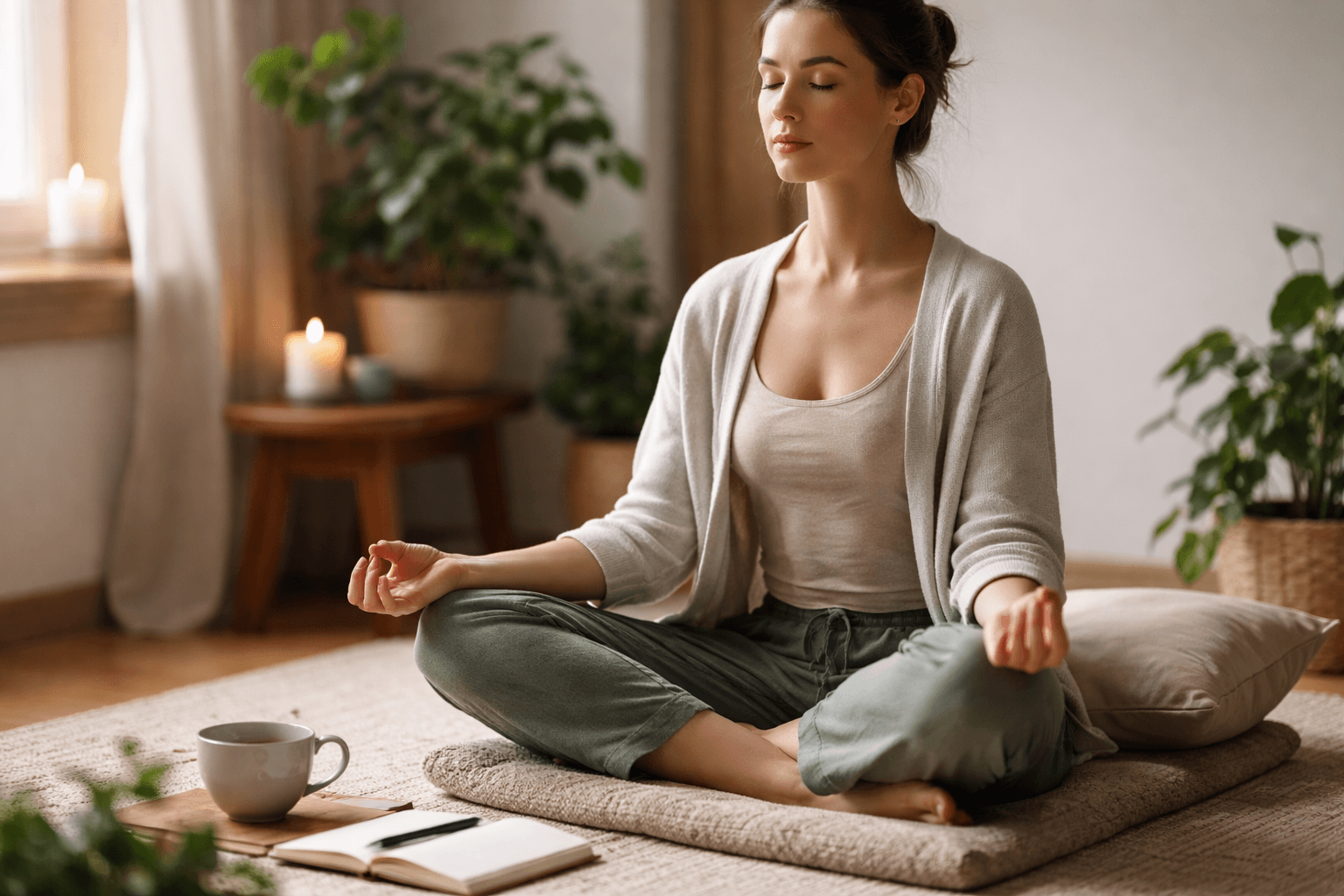
Your breath is the simplest point to pay attention to when meditating. Pay attention to the sensation of air entering and leaving your body. Notice how your chest rises and falls or the sensation of air at the tip of your nose. Your mind will wander, and that’s perfectly normal. Each time you catch it drifting, gently bring your focus back to your breath. This simple act of redirecting your attention is where the real practice happens.
4. Try different techniques
It is not every meditation session will feel the same or work for everyone. Some beginners find guided meditations helpful, where a voice leads them through the process. Others prefer repeating a word or phrase quietly in their mind. You can also try focusing on body sensations or taking a slow, mindful walk. Experimenting with different approaches helps you discover what feels natural and enjoyable.
5. Do not fight your thoughts
Thoughts will come, and trying to push them away only creates more tension, so accept that your mind will wander. The practice is all about noticing when it does and gently bringing your attention back to your focus point. Gradually, this helps train your mind to be less reactive and more present in your everyday life.
6. Use guides or apps if needed
Meditation apps or guided sessions can be very helpful for beginners. They provide structure and reassurance when you are learning the practice. You can follow a short audio or video and gradually gain confidence to meditate on your own. There is no rush to meditate perfectly; support is just a tool to make starting easier.
7. Make it a daily habit
Consistency matters more than length. Short daily sessions are far more effective than long but irregular ones. Pick a time that works for you, perhaps in the morning or before bed, and stick with it. Some sessions may feel harder than others, and that is okay. Meditation is a skill that strengthens with regular practice, not from doing it perfectly once.
Try starting today, even for just three minutes, and see how it changes the way you experience your mind and your day.

Common Challenges and How to Overcome Them
Starting meditation is simple in theory but not always easy in practice. Many beginners face similar challenges, and knowing what to expect can make the process less frustrating.
One of the most common challenges is a wandering mind. You may sit down to meditate and notice your thoughts racing in every direction. This is completely normal because meditation is not about eliminating thoughts, but learning to notice them without getting swept away. Whenever your thoughts drift and you return your focus to your breathing, your mind becomes stronger and more aware.
Another challenge is impatience. Beginners often expect immediate calm or dramatic results, and when it doesn’t happen, it can feel discouraging. Meditation is a gradual practice where regular short sessions are more important than expecting instant perfection
Physical discomfort can also make it difficult to sit still. If your back aches or legs feel restless, adjust your posture or use a chair instead of sitting on the floor. Comfort allows the mind to focus rather than being distracted by physical tension.
Some beginners struggle with building a habit. Life gets busy, and it is easy to skip sessions. One way to overcome this is to attach meditation to an existing routine, such as after brushing your teeth or before bed. A few minutes daily is more powerful than occasional long sessions.
There’s no such thing as a perfect meditation. Every effort you make matters, and your growth is reflected in the habits and awareness you cultivate over time. By acknowledging these hurdles and tackling them with patience and kindness towards yourself, meditation transforms from something daunting into a more manageable and lasting practice.
Further Support Options
Have you thought about keeping a journal to document your experiences? Jotting down your thoughts and observations during or after meditation can really help you identify patterns and keep your motivation alive, even when the changes seem small.
Meditation is often used alongside therapy to help manage stress, anxiety, depression, or emotional ups and downs. A mental health professional, such as a therapist or counselor, can suggest meditation as a supportive tool for relaxation, mindfulness, and focus without replacing formal treatment. They can also tailor practices to your needs. For example, breath-focused meditation can help with anxiety and mindfulness meditation can support emotional regulation and stress management. Working with a professional can make the practice safer, more effective, and easier to integrate into daily life.